Craftsmanship
Light on gold. Not on build.
The easiest way to make a piece cheaper is to make it flimsier. We do the harder version: take the metal out where it does no work, and leave it exactly where it does.
Gold weight
Where the metal comes out, and where it stays
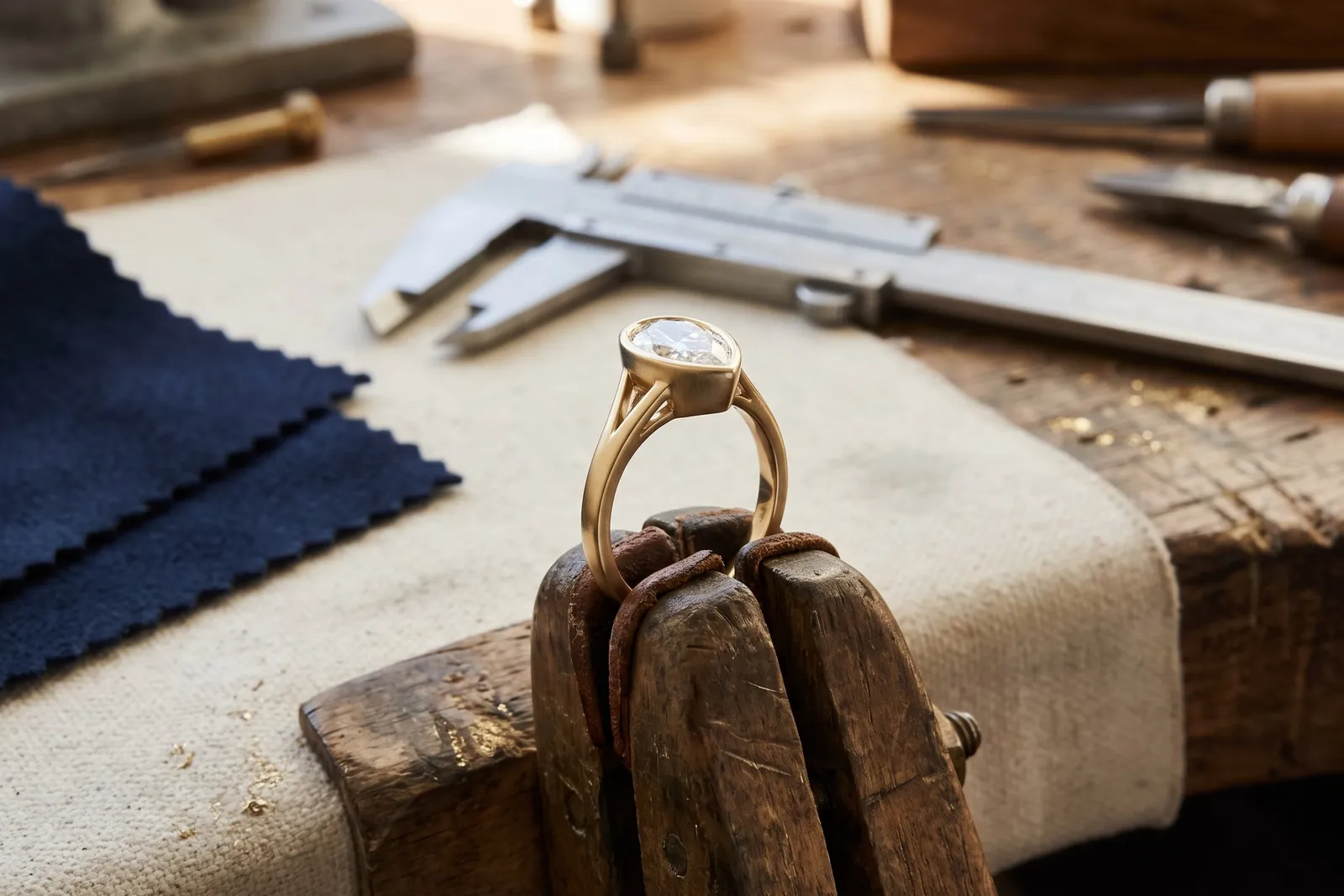
Gold is the largest movable cost in a finished piece, and most of the weight in a badly drawn one is doing nothing — sitting in a thick gallery nobody sees, or in a shank that is heavy rather than strong. Taking that out lowers what the piece costs you and changes nothing a customer will ever notice.
What we will not thin is the part that carries the load. The shank where it takes the hand, the gallery under the centre stone, the prongs themselves — those keep the section they need. The result is a keener price in your showcase and a piece that still stands up to being worn every day, which is the only test that matters after the sale.
Metal
10kt, 14kt, 18kt — and a white that stays white
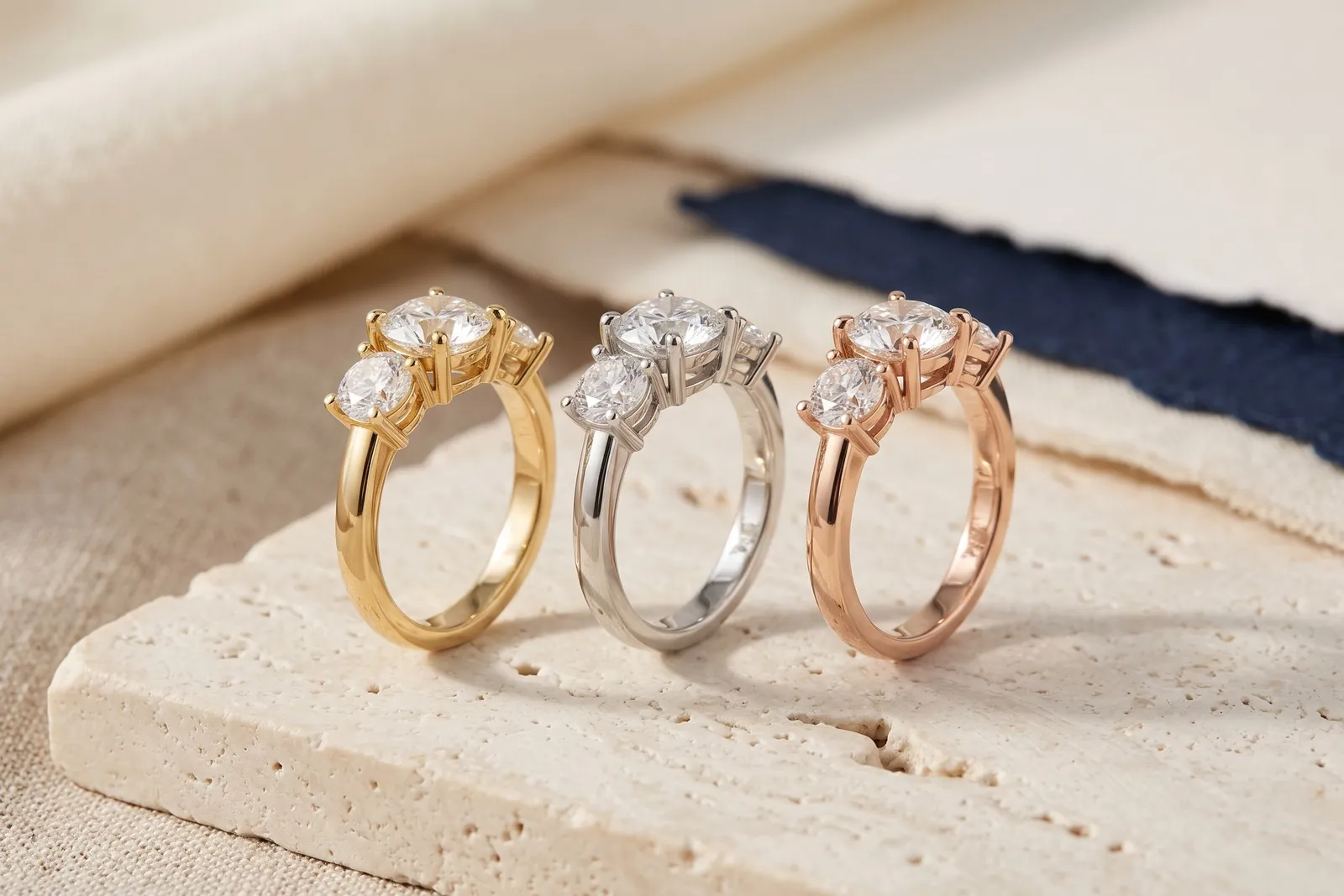
We cast in 10kt, 14kt, 18kt, in yellow, white and rose. The New York vault holds 14kt; 10kt and 18kt are cast to order in Surat. White gold is finished in white rhodium, which is what keeps it bright rather than drifting toward the warm grey that brings a customer back to your counter unhappy.
Karat and colour are specified per order, not per collection — the same design comes in whichever you need, because we cast it ourselves.
Stones
Lab-grown, and graded by people who are not us
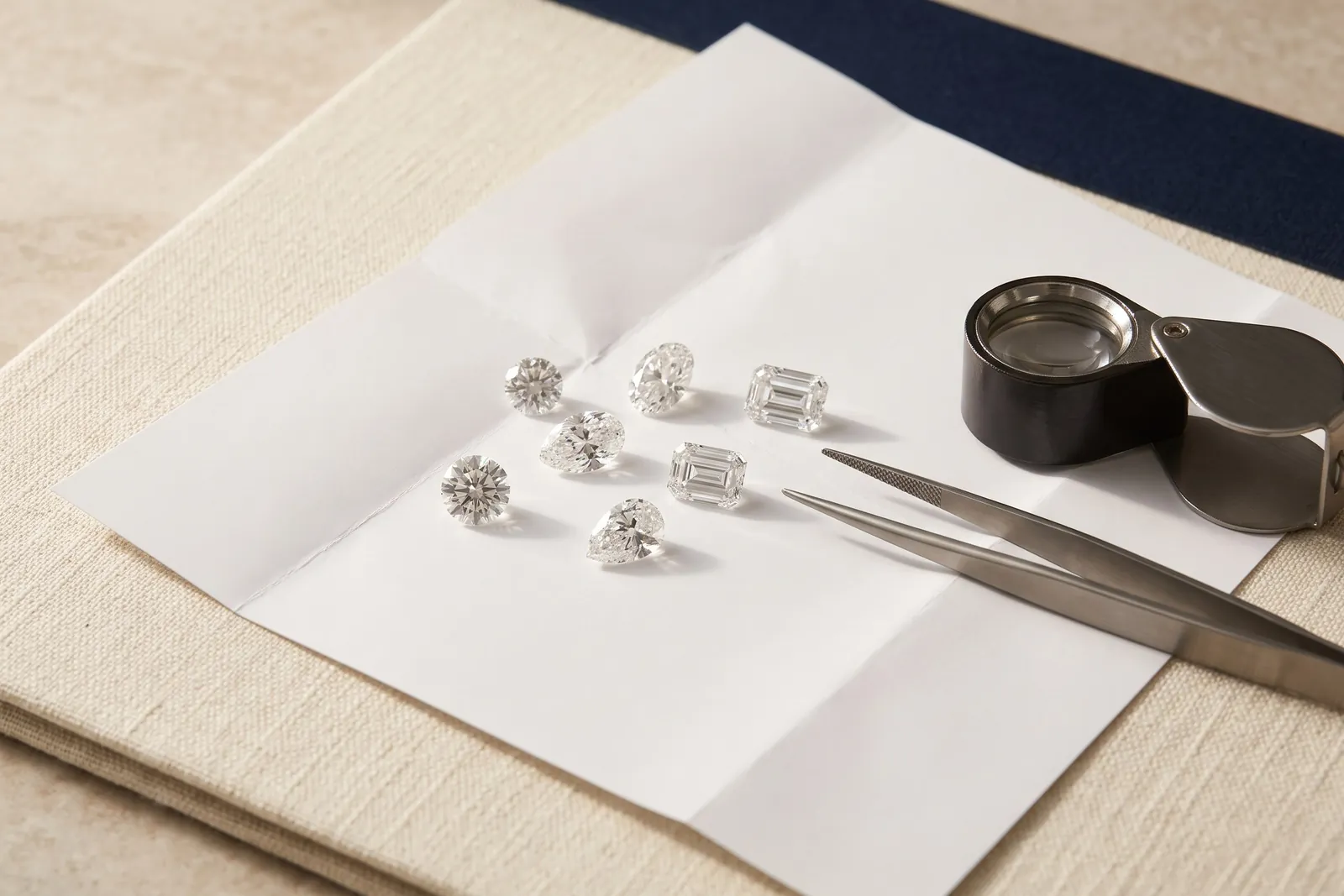
Every diamond is lab-grown. Larger center stones come with a grading report from IGI or GIA; the smaller stones in a tennis bracelet or an eternity band do not, and any other piece can be certified on request for a small fee. An independent report is worth more than any assurance we could write here: it is the document your customer can look up themselves. Behind the reports, the stones are selected by Ravi Dhameliya, an IGI graduate in diamond grading.
Setting
The work that shows up under a loupe
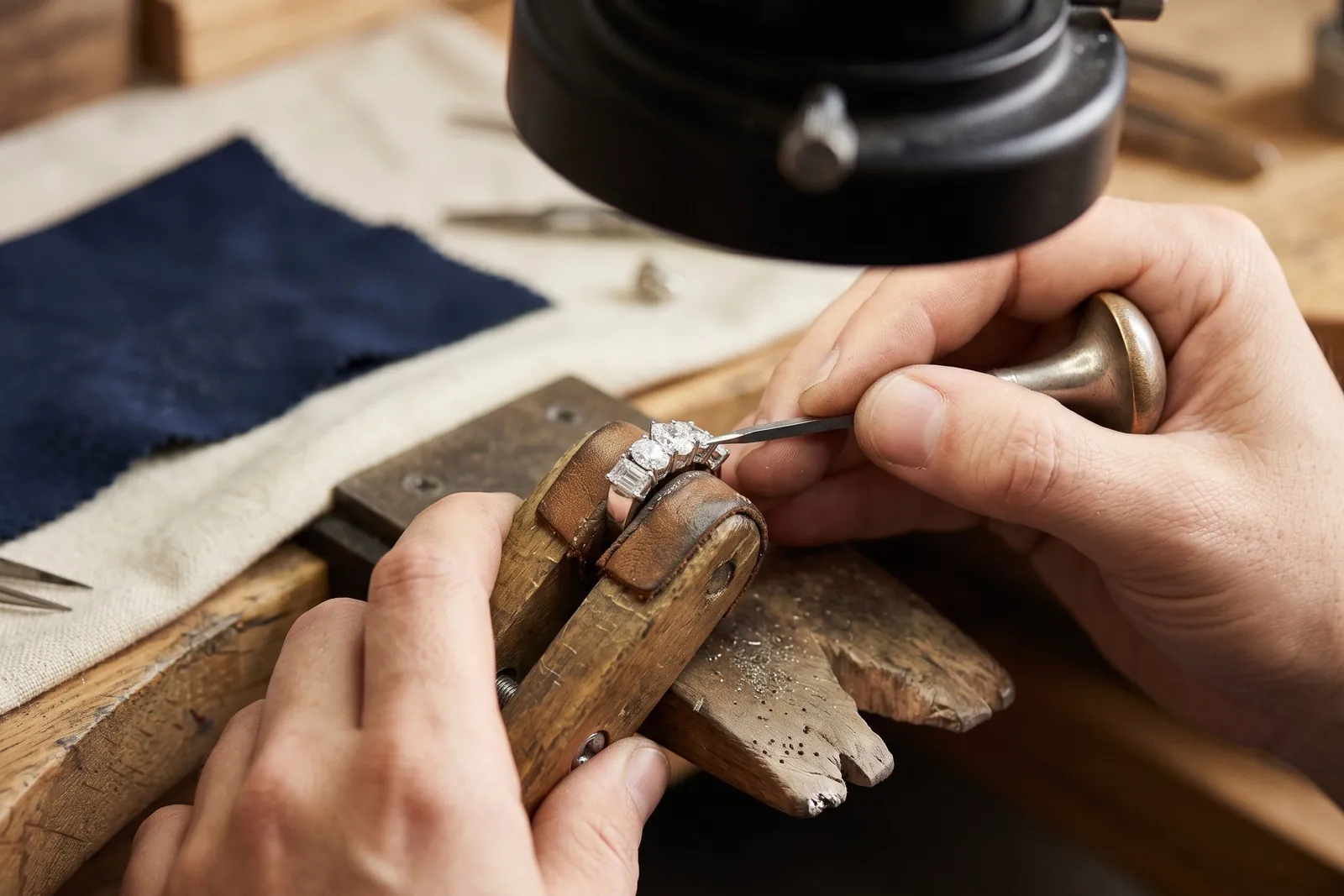
Microscopic pavé is set under magnification, stone by stone, by setters who do only that. It is slow and it is the difference between a row that reads as one continuous line of light and one where the eye catches on every gap.
Before a piece leaves the bench it is checked for structural integrity — prong seating, solder joins, the places a piece fails after a year rather than on the day. The point of a manufacturer is that these checks happen at the bench, not at your counter.
Who makes it
Sixty people, one floor
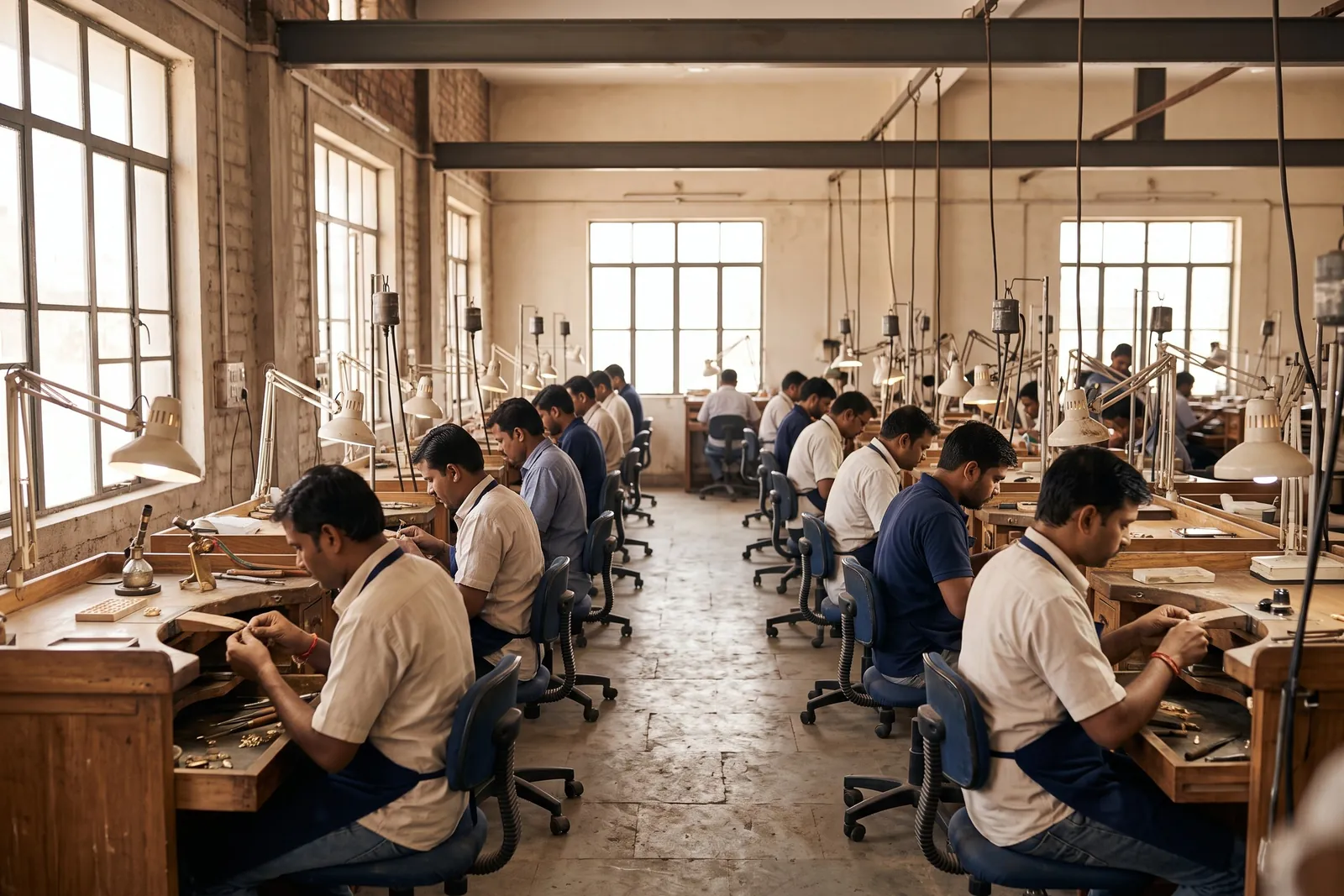
60 artisans in Surat, working a line of 8,000 designs across rings, bracelets, bands, bridal, with capacity for 3,000 pieces a month. Casting, setting and finishing all happen in the same building, which is why a correction takes a conversation rather than a chain of emails.
- Gold
- 14kt in stock · 10kt and 18kt to order — yellow, white, rose
- White gold finish
- White rhodium
- Diamonds
- Lab-grown; IGI / GIA reports on larger center stones, others certified on request
- Categories
- Rings · Bracelets · Bands · Bridal
- Workshop certificates
- MSME Sustainable (ZED) Certification, Bronze · Values of Vishwakarma (VOV) mark, 3 stars
Ask us to build one and judge it in your hand.
Tell us about your store and we'll open your account with wholesale pricing. There is no minimum order, and terms are agreed per account.